
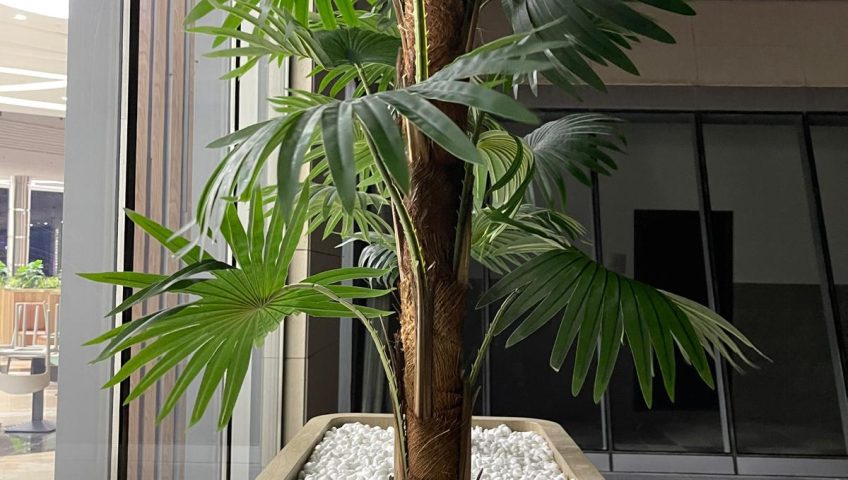
Choosing artificial plants or faux plants, as they are often called sounds simple enough. You find a tree you like, choose a planter and place it in an empty corner.
In reality, that is usually where things start to go wrong.
We have all walked into a beautifully designed space and immediately noticed that the plants feel out of place. The leaves are too shiny, the tree is the wrong size or the planter looks as though it was chosen separately from everything around it.
There may be nothing particularly bad about the plant itself. It simply does not belong in the space.
Good artificial greenery should not be the first thing people question when they enter a room. They should notice that the space feels warmer, calmer or more complete. Ideally, the greenery looks as though it was considered from the beginning, even if it was added much later.
The difference between ordinary décor and high-end artificial plants is rarely one feature. It comes from proportion, texture, shaping, the planter and the final placement working together. When those details are right, you get faux plants that look like real plants at a glance and still feel convincing when someone sits nearby.
That result depends on a few details that are easy to overlook.
Look at the room before looking at plants
It is tempting to begin with catalogue photos, especially when you find a tree or arrangement that looks impressive. But a plant that photographs well on its own may not work in the room you have.
Start with the space itself.
How high is the ceiling? How much floor area is available? Will people walk around the plant, sit beside it or mainly see it from a distance? What colours and materials are already in the room?
A tall artificial olive tree can look beautiful in a double-height entrance, but the same tree may make a smaller office feel crowded. On the other hand, a modest tabletop arrangement can add character to a reception desk but disappear completely inside a large hotel lobby.
Sometimes the room needs one strong feature. Sometimes it needs several quieter touches.
In a villa, a single statement tree may be enough to transform an unused corner. A restaurant might need greenery between tables to soften the seating area and create a little privacy. An office could benefit from plants along a glass partition or in the areas that always seem slightly empty.
There is no standard answer because every space has its own proportions and purpose.
Which artificial plants work best in different spaces?
There is no single plant style that works everywhere. The right choice depends on the scale of the room, how close people will be to the greenery and what the installation needs to achieve.
- Hotel lobbies and large entrances: tall artificial olive, ficus or palm trees can balance high ceilings and create a strong first impression.
- Restaurants and cafés: layered palms, monstera and ferns work well in planters between tables, where they can soften the room and add privacy without forming a solid barrier.
- Offices and reception areas: slimmer trees and structured foliage suit corners, glass partitions and waiting areas without taking over the floor plan.
- Ceilings and overhead features: trailing faux plants add depth and movement while keeping walkways and valuable floor space clear.
- Outdoor terraces and entrances: use only greenery rated for exterior conditions, with UV resistance and secure anchoring chosen for the actual exposure.
These are starting points, not fixed rules. A convincing result comes from selecting the plant, height, density and planter as one composition rather than making each decision separately.
The small imperfections are what make realistic artificial plants believable
Real plants are not perfectly arranged.
One branch sits higher than another. Some leaves face the light while others turn away. Colours vary slightly, and the shape is rarely completely symmetrical.
Artificial plants often look unconvincing when they are too perfect. If every leaf has the same colour, shine and position, the eye notices it almost immediately.
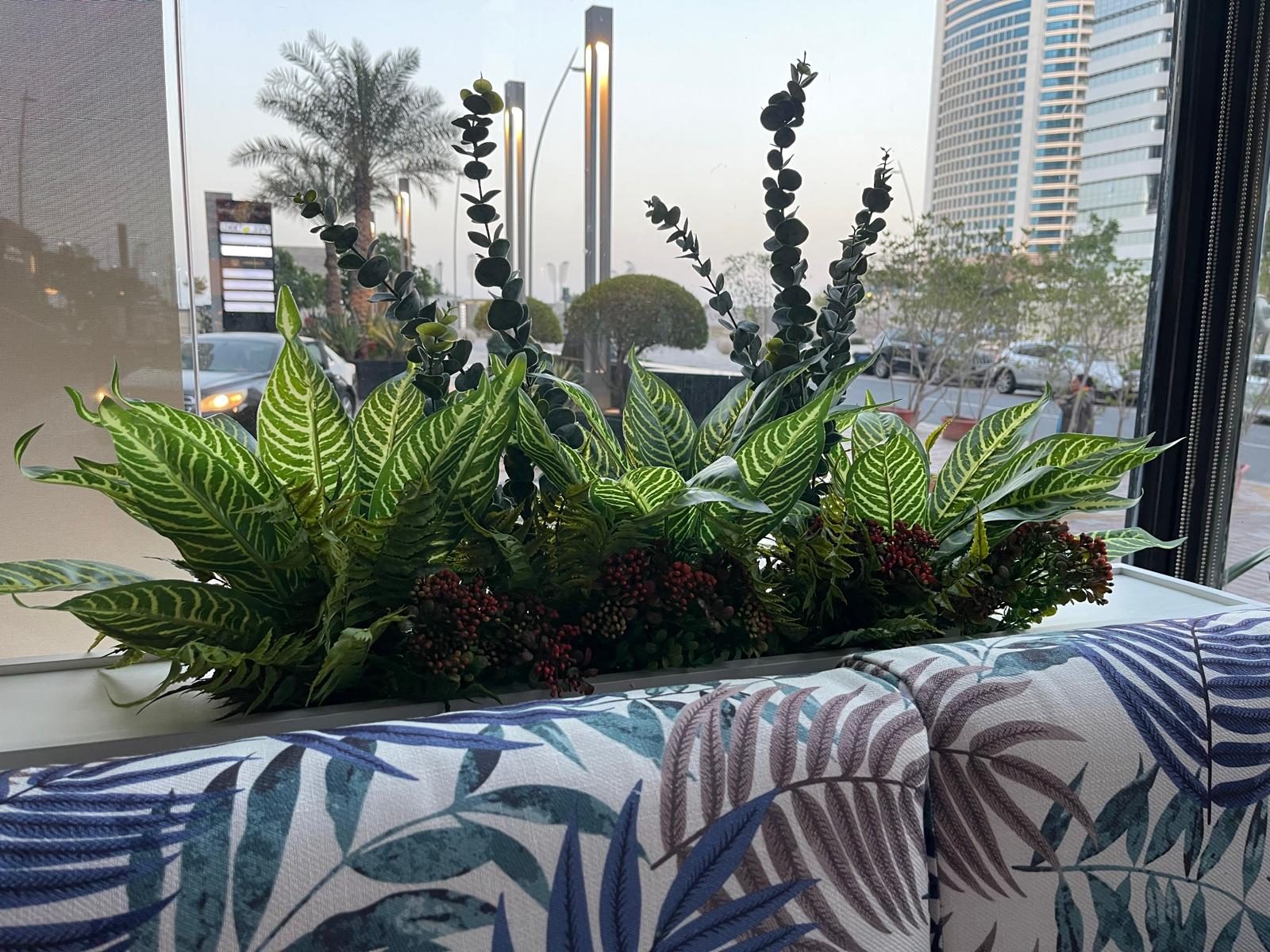
When choosing artificial greenery, look closely at the texture of the leaves and stems. The colours should have some natural variation, and the branches should be flexible enough to shape during installation. The trunk matters too, particularly when it will be visible at eye level.
Glossy leaves are another common giveaway. Some plants naturally have a little shine, but an overly reflective finish can make the material look like plastic under bright indoor lighting.
Many products are described as luxury artificial plants, but the label on its own means very little. A higher price does not automatically guarantee a convincing finish. Look at the leaf edges, colour variation, branch structure and trunk materials, then see how the plant changes under the actual lighting in your space.
It is also worth checking the plant from the distance at which it will usually be seen. For a large lobby tree, the overall silhouette is important. For greenery beside a restaurant table or reception desk, the close-up details matter much more.
One detail people sometimes miss is that even the most lifelike plants need to be shaped after they arrive. Branches are often compressed for transport. Taking them directly out of the packaging and placing them in a planter will rarely give the best result. Each branch needs to be opened, adjusted and positioned so the plant has a more natural form.
The planter is not a separate decision
A realistic tree in the wrong planter will still look wrong.
The planter affects the scale of the installation and the way it connects with the interior. If it is too small, the tree can look top-heavy. If the colour or material clashes with the surrounding finishes, the entire installation may feel like a last-minute addition.
Modern offices often suit simple planters with clean shapes and neutral finishes. Restaurants can carry warmer colours, textured surfaces or planters that form part of the seating layout. In a private villa, the planter may be more decorative or even become a feature of its own.
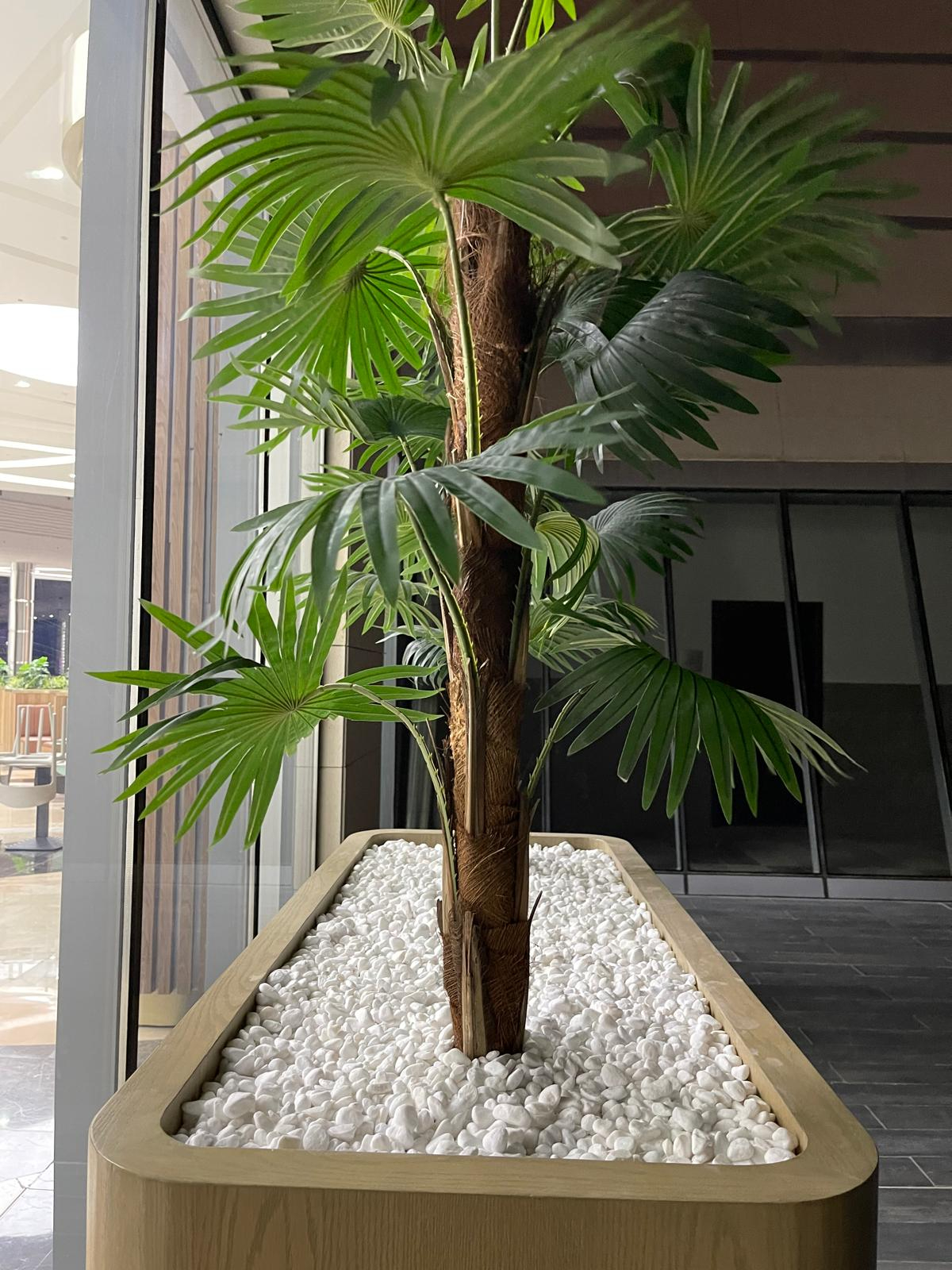
What goes around the base of the plant also makes a noticeable difference. Decorative bark, stones, moss or other ground cover can hide the internal support and give the arrangement a much more finished appearance.
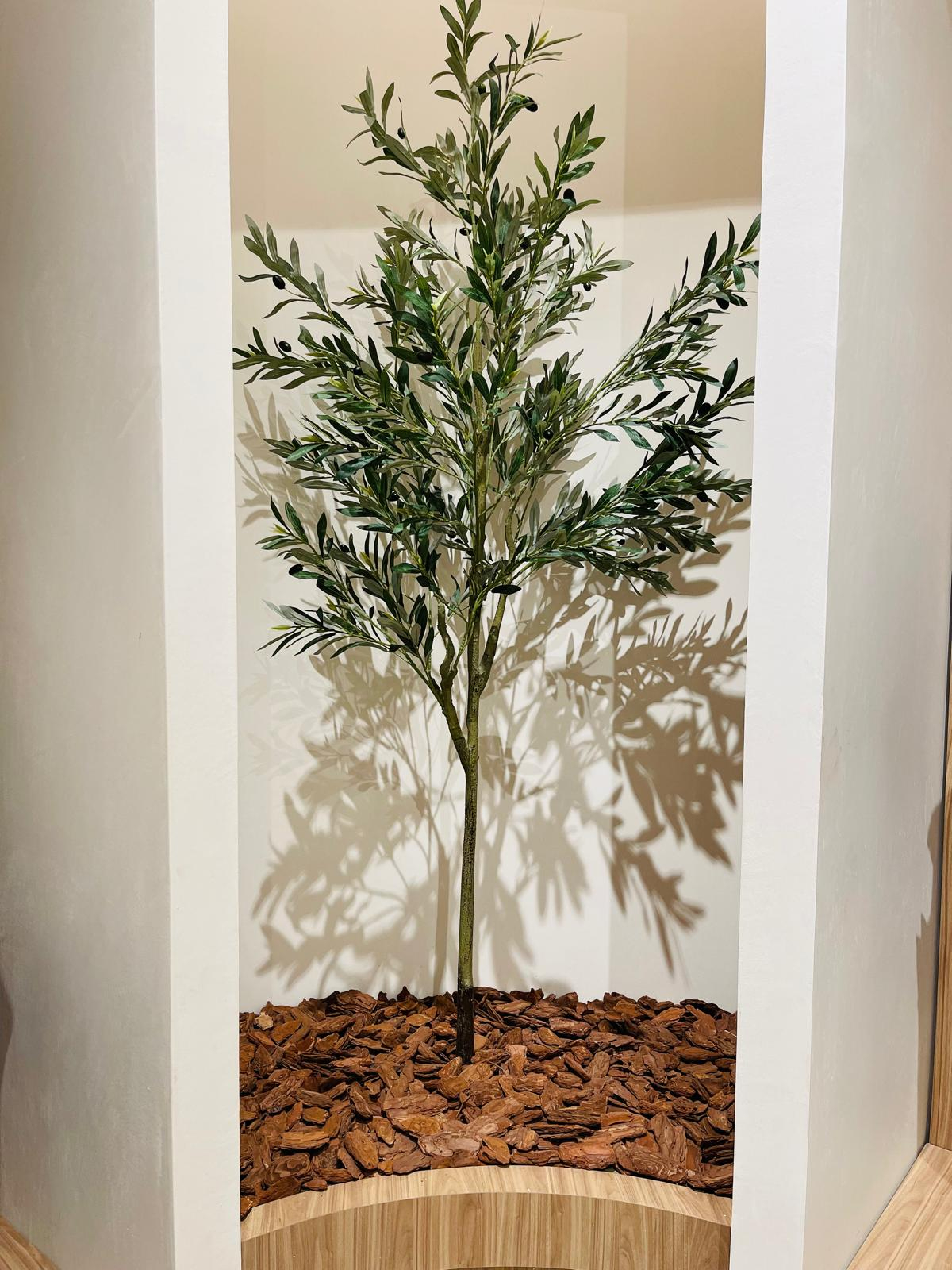
The artificial olive tree installed at Annabella in Doha Festival City is a good example. The tree sits inside a built-in curved feature finished with decorative bark. It does not feel like a separate object placed in the restaurant. It feels connected to the architecture around it.
That is what a well-planned installation should achieve.
Outdoor greenery in Qatar needs a different approach
Artificial plants are practical, but that does not mean every artificial plant can be used everywhere.
Qatar’s outdoor conditions are demanding. Strong sunlight, high temperatures, dust and wind can all affect artificial foliage over time. A plant designed for an air-conditioned interior should not automatically be placed on a terrace or outside a villa entrance.
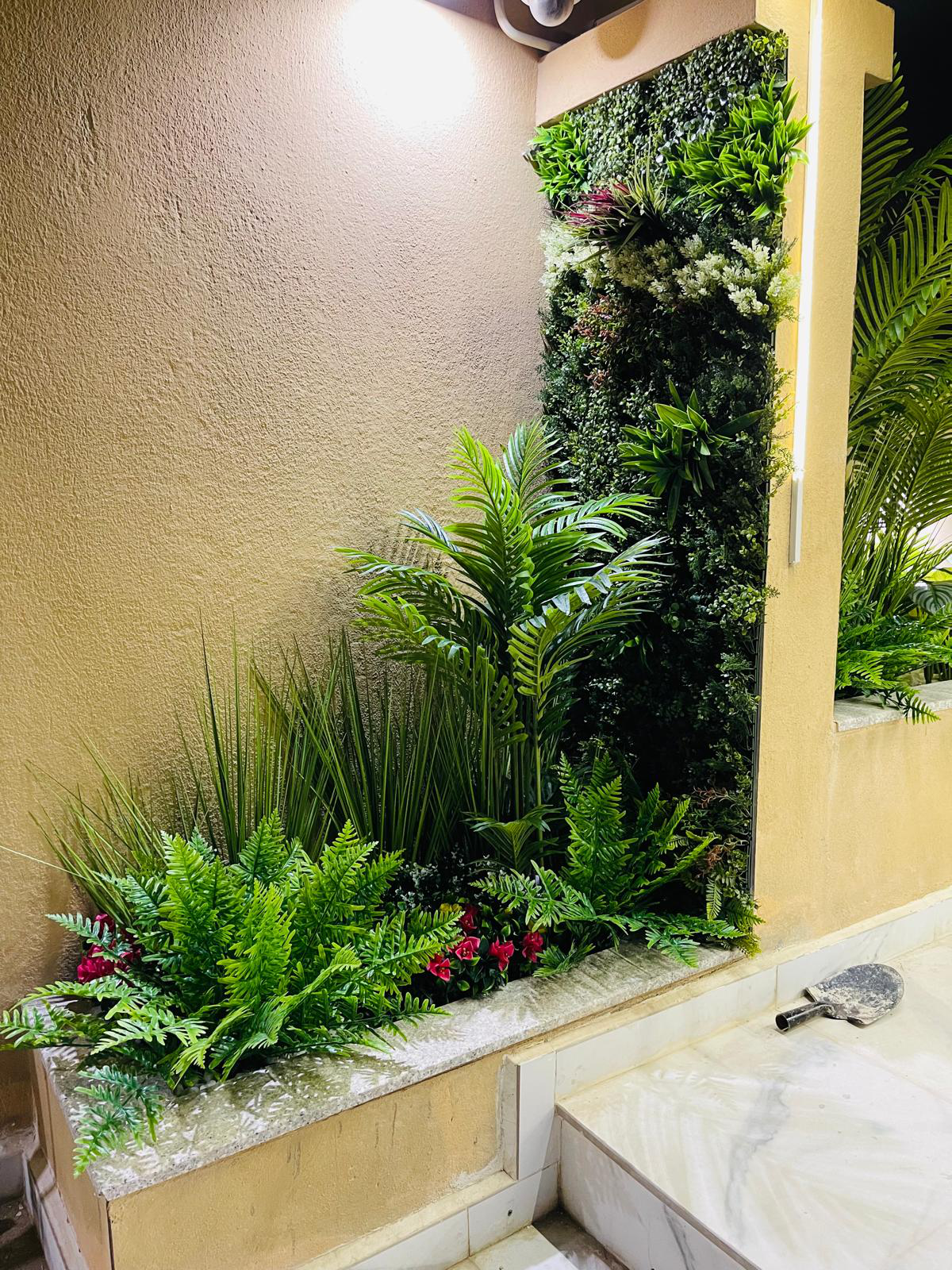
Outdoor areas generally require artificial greenery made with UV-resistant materials. Even then, the exact position needs to be considered.
A shaded entrance does not receive the same exposure as a rooftop terrace. An outdoor restaurant area protected by surrounding buildings will have different conditions from a villa garden that receives direct sunlight for most of the day.
This is why “UV-resistant” should not be treated as a complete answer. The supplier should understand where the plants will be installed, how much sunlight reaches the area and whether the greenery will be exposed to wind and dust.
Artificial plants are low-maintenance, not completely maintenance-free. Outdoor installations will still need occasional cleaning, while indoor plants should be dusted from time to time to keep the leaves looking fresh. If you are still deciding between plant types, our guide to preserved, artificial and live green walls in Qatar explains where each option works best.
It is a small amount of care compared with maintaining living plants, but it should still be considered.
Greenery works best when it has a purpose
Adding greenery simply because an area looks empty can work, but the strongest installations usually solve a more specific problem.
Perhaps a restaurant feels too open and needs gentle separation between tables. A hotel lobby may look impressive but slightly cold. A long corridor might need colour and movement, while an awkward corner may need a focal point.
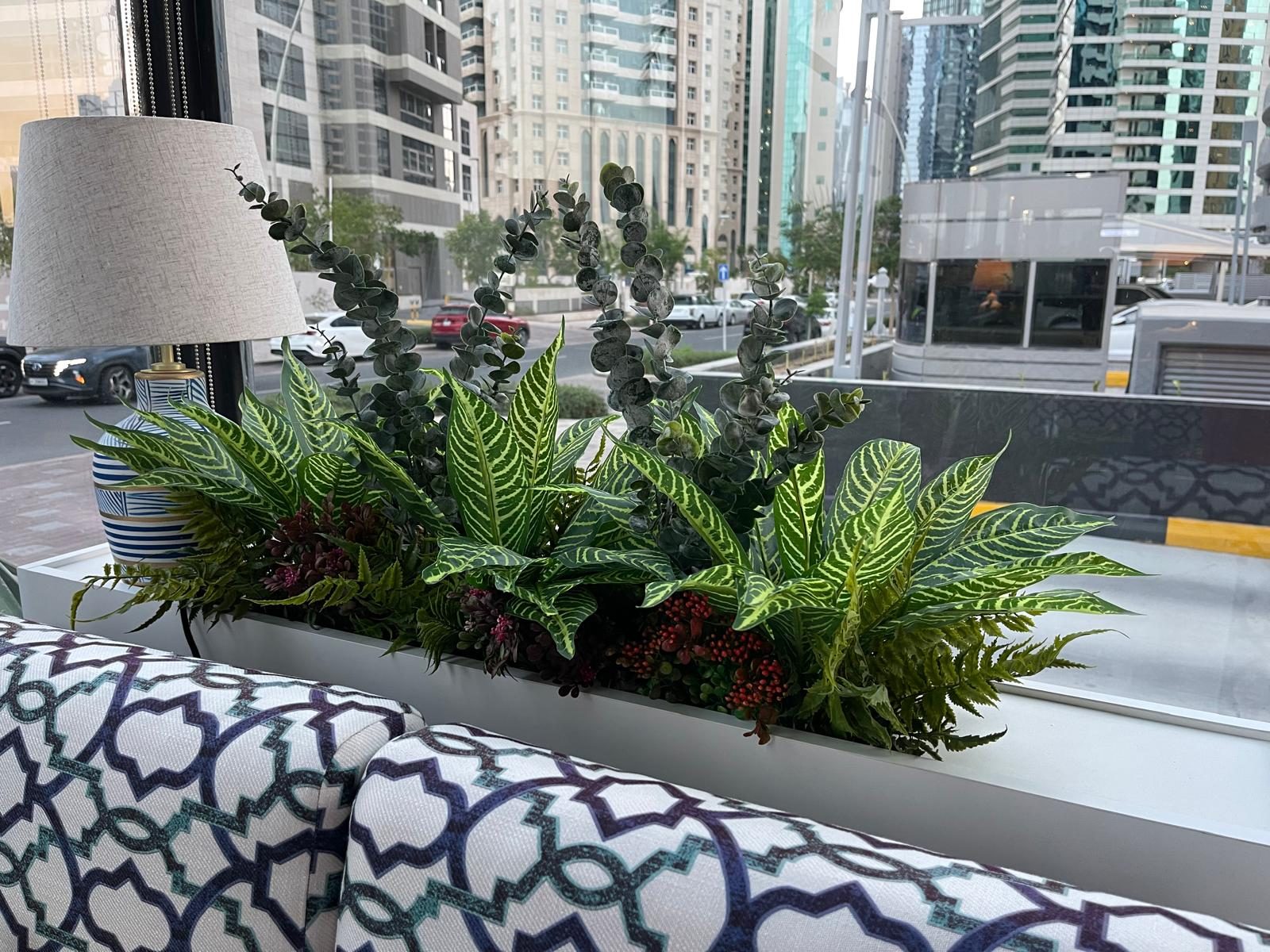
At Lemon Garden Restaurant in West Bay, the greenery does more than decorate the dining area. Planted sections help define the seating and make the tables feel more comfortable without closing them off behind solid partitions.
Hanging plants can also draw attention upwards, particularly when there is an attractive ceiling feature or unused overhead space. Green walls introduce a strong visual element without occupying valuable floor area. Large artificial trees can give spacious entrances a sense of scale and help balance the surrounding architecture.
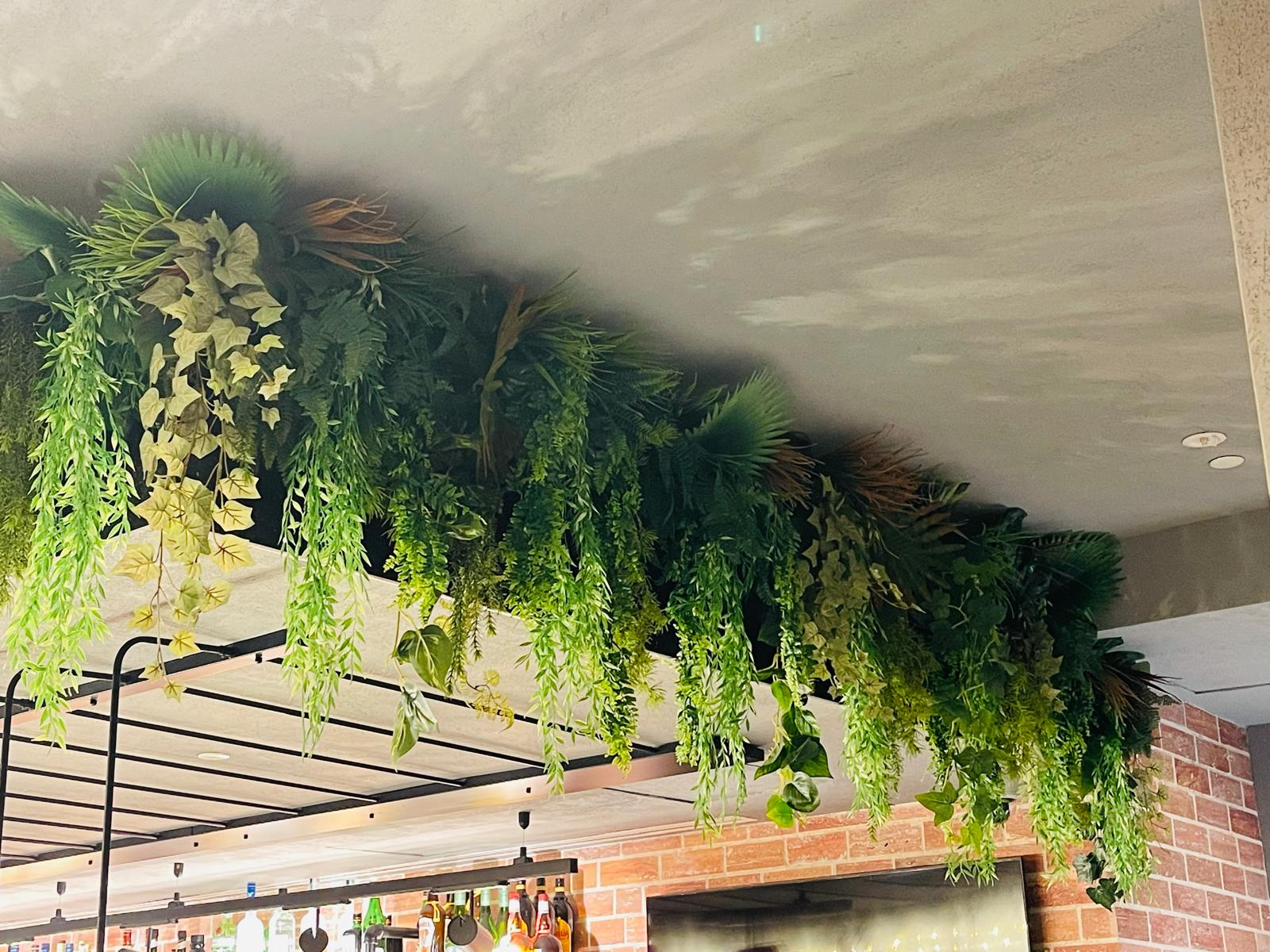
Instead of beginning with “Where should we put some plants?”, it is often more helpful to ask, “What does this space need?”
The answer could be privacy, softness, colour, height or simply a stronger connection between different parts of the interior.
A natural arrangement is rarely made from one repeated plant
Using one type of plant again and again can make an installation feel more like a display than a landscape.
In nature, greenery appears at different heights. Some leaves are broad and full, while others are lighter and more delicate. Recreating a little of that variety helps an artificial arrangement feel much more convincing.
Usually, one taller plant establishes the shape. Medium-height foliage fills the centre, and smaller plants soften the base and edges. Different textures can be mixed, but they still need to feel connected.
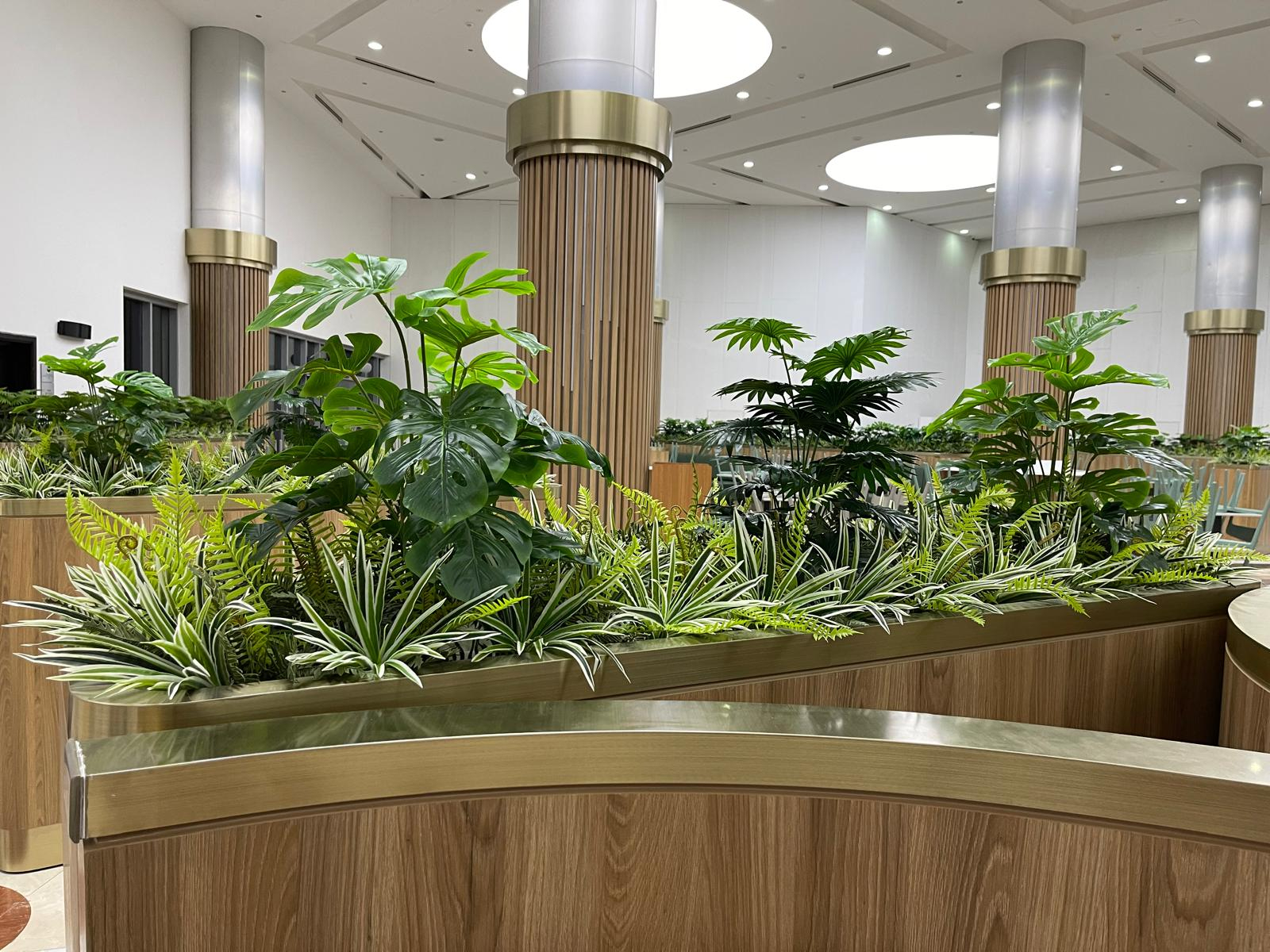
The planting created for the Doha Mall Food Court combines monstera, fan palms, forest ferns and other tropical foliage inside custom planters. There is variety, but the plants still read as one complete arrangement.
It is possible to go too far in the other direction. If every plant has a different colour, leaf shape and style, the result can become distracting. A smaller selection, repeated carefully, often looks more natural than trying to include every available option.
See the installation from the visitor’s point of view
An artificial tree may look perfect from the angle used in a design presentation, but people will experience it while moving through the space.
If the tree is positioned in the middle of a lobby, visitors may see it from every direction. The canopy needs to feel balanced, the planter should be properly finished and any internal supports should remain hidden.
In a restaurant, someone seated beside the greenery will notice details that are invisible from across the room. Plants placed near walkways also need to leave enough space for people to move comfortably.
Before finalising the arrangement, walk through the area as a visitor would. Look at it from the entrance, nearby seating and any connecting corridors. This simple check often reveals an unfinished side, an exposed base or a branch that needs to be repositioned.
Good greenery should work in the room, not only in photographs.
Choosing the right artificial-plants supplier in Qatar
A supplier should do more than show you a catalogue and ask which plant you prefer.
They should look at the dimensions, lighting, finishes and intended use of the space. They should explain whether a product is suitable indoors or outdoors, how larger trees will be secured and what cleaning will be required.
It is also worth asking whether the arrangement can be customised. Standard products may work for smaller areas, but larger commercial spaces often need custom heights, carefully selected planters or a combination of plants created specifically for the location.
Most importantly, ask to see completed projects. Finished installations give you a much clearer idea of how the supplier handles scale, shaping, planters and the finer details that are difficult to judge from individual product images.
Questions people ask about faux plants in Qatar
Can faux plants really look like real plants?
Yes, but realism comes from more than the leaves. A convincing installation combines varied colour, natural branch positions, a believable trunk, careful shaping and a planter that suits the room. Lighting matters as well. The same plant can look soft and natural in one corner and overly glossy beneath a harsh spotlight.
Are high-end or luxury artificial plants worth it?
They are worth considering when the greenery sits close to guests, forms a major feature or needs to represent the standard of a hotel, restaurant, office or luxury home. The better choice is not always the most expensive item in a catalogue. It is the one with the right scale, materials and finish for that particular space.
How do you keep artificial plants looking fresh?
Dust is usually what makes faux greenery lose its realistic finish. For indoor plants, use a soft microfiber cloth, feather duster or gentle air blower, working from the top down. Avoid harsh chemicals that may leave the leaves glossy or damage their colour. Outdoor installations may need more frequent cleaning because of dust, but the method should match the material and how securely the foliage is fixed.
Can realistic artificial plants be used outdoors in Qatar?
They can, provided the foliage is designed for outdoor use and the site conditions have been assessed properly. Direct sun, reflected heat, wind and dust all affect performance. For exposed areas, ask about UV resistance, anchoring and cleaning before selecting the plant.
When it works, you do not think about whether it is real
The best artificial greenery does not spend its time trying to prove that it is a living plant.
It simply feels right in the room.
The proportions work, the leaves look natural, the planter fits the interior and the greenery has a clear purpose. It softens the space without competing with everything around it.
At ASTA Trading Qatar, we design and install customised artificial plants and trees, green walls, hanging greenery and planters for restaurants, hotels, offices, retail spaces and private villas.
Every project begins with the space itself. We look at what is missing, what will suit the surroundings and how the greenery will be experienced once the area is in use.
If you are looking for artificial plants in Qatar, contact ASTA Trading Qatar on +974 4029 0877 to arrange a consultation or request a quotation.